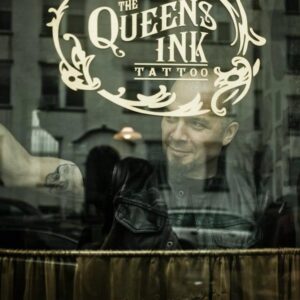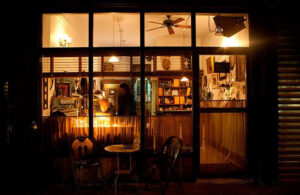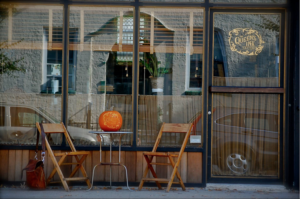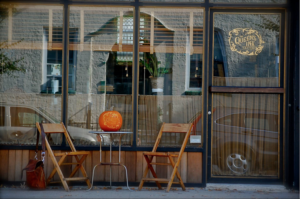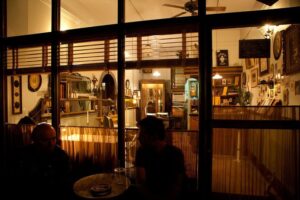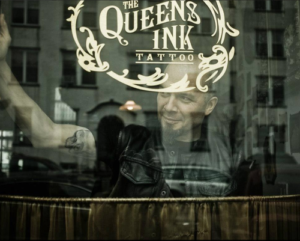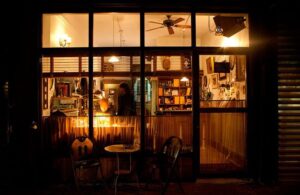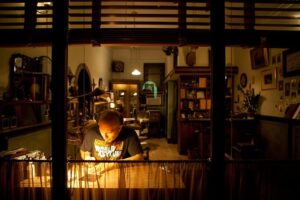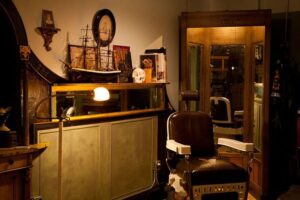
On quiet 29th Street, close to the corner of 24th Avenue in the heart of Astoria, a warmcopper glow emanates from a shop window, spilling softly onto the surrounding sidewalk. It’s almost impossible not to be drawn toward the amber haze and shadowy figures moving about inside. A close look will show that the small space is a tattoo parlor, though one step in reveals a world of its own, where a distinct brand of art and its impassioned creators have secured a permanent residence.
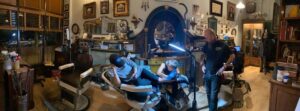
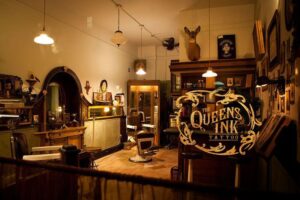
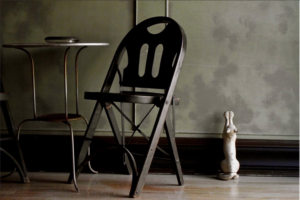
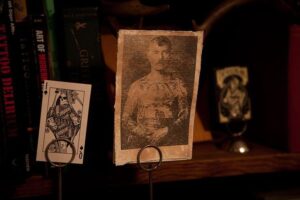
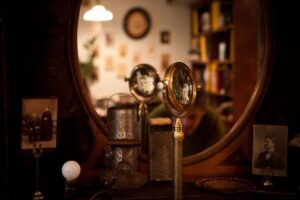
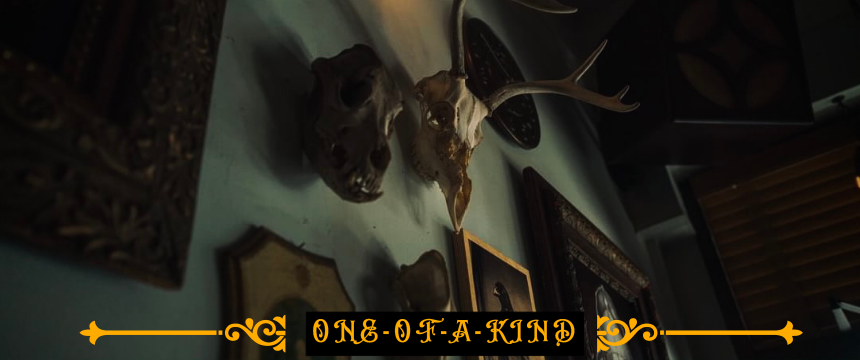
The Queens Ink was in 2012 (when it was open), Astoria’s newest tattoo parlor, but its oldfashioned décor and bohemian aesthetic places it in a category of its own. The vintage-clad shop shows more resemblance to an antique store or museum of ancestral relics than to a typical tattoo parlor. Oddities from a bygone era line the walls and ornament the crowded yet ample space. Sepia pictures that could have been discovered in a Civil-War era photo album depict men with the sort of horseshoe mustaches and Lincolnesque beards that are making a steady comeback. Skulls gaze off into the distance, wooden ships remain docked on shelves, and a large deer head oversees operations from above.
The eccentric shop was the latest work of art to escape the mind of Evangelos Roumeliotis, then an 18-year Astoria resident and designer.
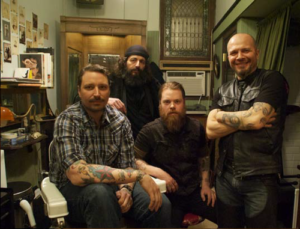
The Queens Ink, a small establishment with only three chairs, has made it a point to distance itself from the commercialism and mainstream marketing that is beginning to surround the artistic practice. “Tattoo culture is changing a lot, and not always in a good way, thanks to the TV shows and magazines,” says Christian Zink, one of the shop’s artists and now the owner of the shop.
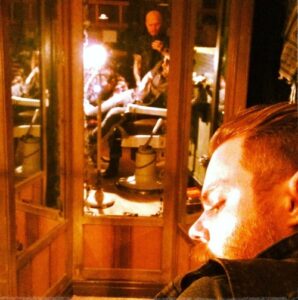
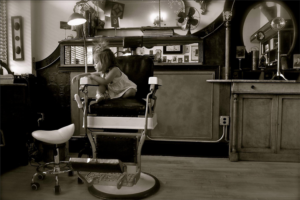
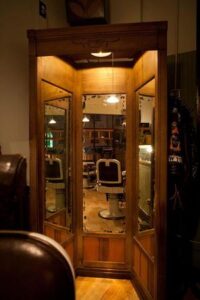
The Queens Ink’s desire to preserve creative integrity and artistic value is evident in every inch of the strategically designed space, which has the allure of an art studio or early 1900s barbershop. It may be safe to say that the tattoo machines and ink, barely visible among the organized clutter of antiquated gems and well-preserved books, is the only commonality the shop shares with its very distant relatives. If The Queens Ink is the black sheep of the tattoo parlor family, it dons its title proudly: “The main idea was to not create another tattoo shop that has neon lights or looks like a dentists’ office,” Zink says. “We do custom work and work with each client to design something original.”
Despite the small space and three chairs, The Queens Ink has been, quite literally, making its mark on Astoria. During the shop’s hours — 1 to 9 p.m. every day — locals and ink-seekers alike have been offering up limbs and barren skin to experience the dedication and personalization that comes along with a trip to the easy-going, independent shop. Not to mention, the inventive adornment that is enthralling enough to draw just about anyone passing by into one of the tattoo chairs.
Just beyond The Queens Ink is a park, and just beyond the park is the Astoria Boulevard subway stop, where N and Q trains race tirelessly, cutting across boroughs, but always returning to Queens’ northwest corner. The tracks rumble, basketballs bounce in the park, forks scrape plates in a nearby restaurant, and inside a small shop that lights the sidewalk with a slight copper hue, a familiar buzzing sound changes pitch each time needle meets skin, leaving traces of ink as permanent as the commitment and vision of the artists controlling the machines. .